
Frozen Lemonade Popsicles with Fresh Fruit (Bright, Tangy & Summer in Every Bite)
Prep Time: 15 minutes | Freeze Time: 6 hours (overnight recommended) | Total Time: 6 hours 15 minutes | Servings: 10 popsicles | Calories: 75 kcal per popsicle
Frozen lemonade popsicles with fresh fruit are bright, intensely citrusy lemonade popsicles with real pieces of fresh strawberries, blueberries, raspberries, and kiwi suspended throughout a clear, golden lemon base that freezes into something jewel-bright and stunning when held up to the light. The base is sharp and properly lemony. The fruit pieces are sweet and distinct. The texture is smooth and clean, neither icy nor overly soft, with a snap when the first bite goes in.
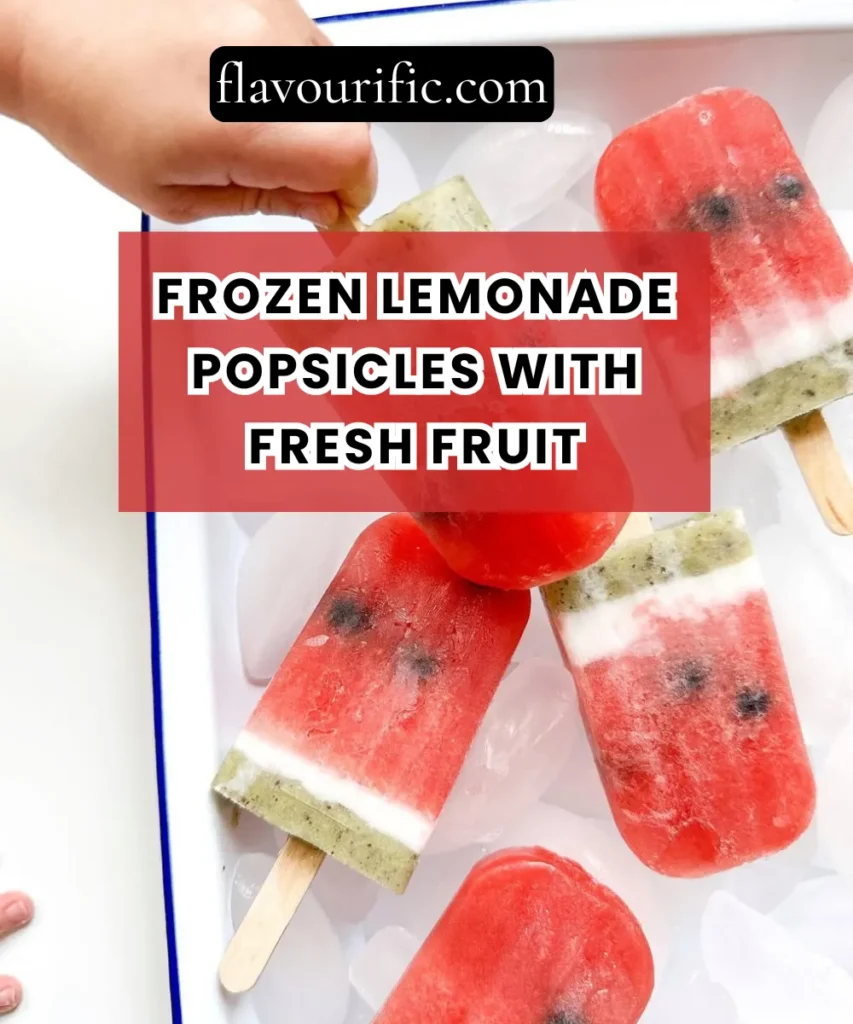
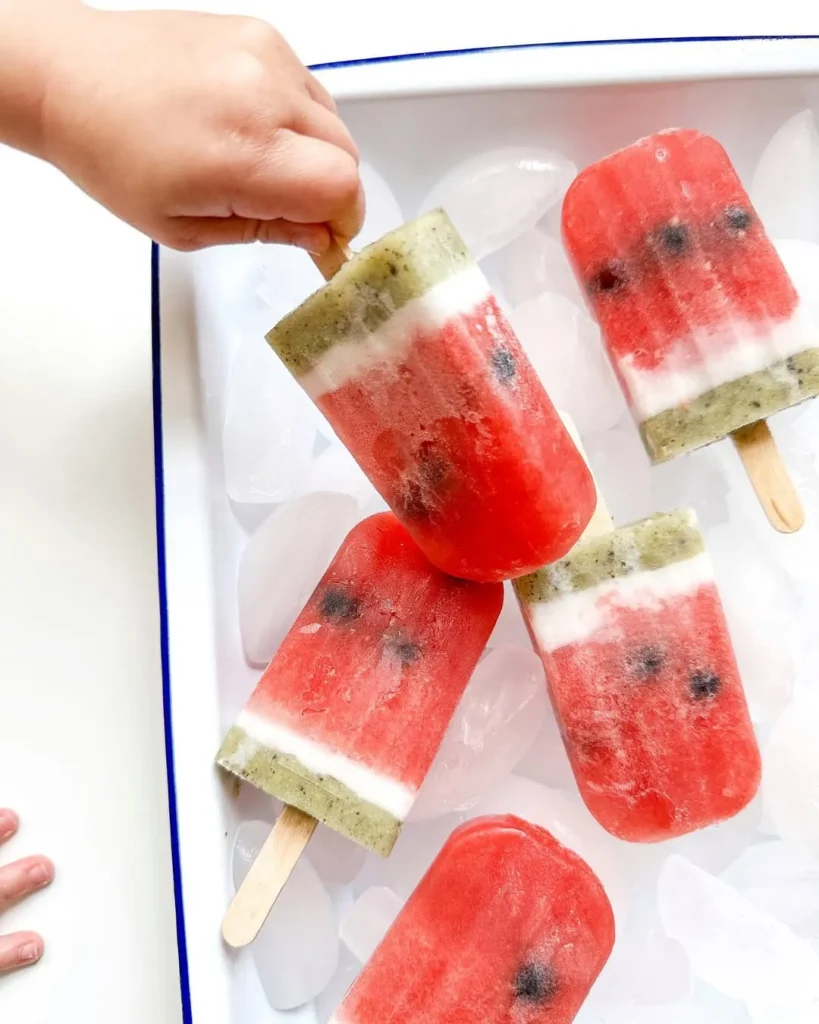
This is the popsicle that looks like it costs four times what it takes to make. The fruit suspends in the lemon base during freezing and creates a stained-glass effect through the mold. They look like something from a boutique ice cream shop and take fifteen minutes of actual work to make.
Fifteen minutes to prep. Six hours in the freezer. A batch of ten popsicles that makes summer feel exactly as good as it should.
Why You Will Love This Recipe
Frozen lemonade popsicles with fresh fruit earn a permanent spot in your summer routine. Here is what makes this recipe worth making.
They are made entirely from real ingredients. Fresh lemon juice. Real sugar syrup. Actual pieces of fruit. No artificial flavoring. No food coloring. The color comes entirely from the fruit.
They look extraordinary with almost no effort. Fruit pushed into a clear lemon base creates a natural stained-glass effect through the popsicle mold. The visual result looks deliberate and considered, and takes nothing more than placing the fruit strategically before pouring.
They are endlessly adaptable. The lemon base stays the same. The fruit changes with the season. A completely different popsicle every time from the same base recipe.
They keep for weeks. Made once, stored in the freezer, pulled out individually as needed. Ten popsicles from one batch means summer dessert is handled for two weeks.
They are genuinely refreshing in a way that bought popsicles never quite manage. Real lemon juice, properly sweetened, frozen clean. The difference between fresh and artificial is immediately obvious in the first bite.
Ingredients
For the lemon base:
- 1 cup (240ml) fresh lemon juice (about 6–8 large lemons)
- ¾ cup (150g) granulated sugar
- 2 cups (480ml) cold water
- 1 tablespoon lemon zest (from the lemons juiced above)
- Pinch of salt (brings out the lemon flavor)
For the fresh fruit:
- ½ cup (75g) fresh strawberries, hulled and thinly sliced
- ½ cup (75g) fresh blueberries, left whole
- ½ cup (60g) fresh raspberries, left whole or halved
- 1 medium kiwi, peeled and thinly sliced into rounds, then halved
- Optional additions — sliced mango, halved cherries, thinly sliced peach, or pomegranate arils
For the popsicles:
- 10 popsicle molds (3–4 oz / 90–120ml capacity)
- 10 popsicle sticks if the molds do not include them
Equipment Needed
- Popsicle molds — silicone molds release most cleanly
- Small saucepan for the simple syrup
- Citrus juicer or press
- Fine mesh strainer for straining the juice
- Large measuring jug or bowl with a pour spout
- Sharp knife and cutting board
- Measuring cups and spoons
Instructions
Step 1: Make the simple syrup first. Combine the granulated sugar and ½ cup of the cold water in a small saucepan over medium heat. Stir until the sugar dissolves completely. Do not let it boil — the moment the sugar is dissolved, and the liquid is clear, remove it from the heat. This takes about 2–3 minutes. Cool the syrup to room temperature before using. Hot syrup added to the lemon base cooks the fresh fruit and clouds the liquid.
Step 2: Juice the lemons. Roll each lemon firmly on the counter with the palm of your hand before cutting and juicing — this breaks down the internal membranes and produces significantly more juice from each lemon. Strain the juice through a fine mesh strainer to remove seeds and pulp. Measure 1 cup of strained fresh lemon juice.
Step 3: Zest enough lemon for 1 tablespoon of zest before juicing — it is much easier to zest a whole lemon than a cut one. Store the zest separately.
Step 4: Combine the cooled simple syrup, fresh lemon juice, lemon zest, remaining 1½ cups of cold water, and a pinch of salt in a large jug. Stir well. Taste the lemon base. It should be bright, sharp, and pleasantly sweet — like a properly made lemonade. Adjust with a little more sugar dissolved in warm water if too sharp or a little more lemon juice if not sharp enough.
Step 5: Prepare all the fruit. Hull and thinly slice the strawberries — slices about 3–4 mm thick show up beautifully through the mold. Leave blueberries whole. Leave raspberries whole or halve them. Peel and slice the kiwi into thin rounds, then halve each round so they sit flat against the mold wall.
Step 6: Build the popsicles. Stand all the molds upright. Drop a few pieces of fruit into each mold — start with pieces that will press against the sides of the mold for the stained-glass effect. Press a strawberry slice or a kiwi half-round flat against the side of each mold so it faces outward. Drop blueberries and raspberries in to fill the gaps.
Step 7: Pour the lemon base slowly into each mold, filling to about 1 cm below the top to allow for expansion during freezing. Pour slowly around the fruit so the pieces do not move and shift from where you placed them.
Step 8: Tap each mold gently on the counter several times to release any air bubbles trapped between the fruit pieces. Air bubbles create white spots in the finished popsicle that obscure the fruit.
Step 9: If the molds have lids with built-in sticks, press them on now. If using individual popsicle sticks, place a sheet of plastic wrap over the top of the molds, then push each stick through the plastic wrap into the center of each mold. The plastic wrap holds the stick upright and centered while the base freezes enough to hold it in place.
Step 10: Freeze for at least 6 hours. Overnight is better. The popsicles need to be frozen completely solid from the very center — a partially frozen popsicle falls off the stick when unmolded.
Step 11: To unmold, do not pull or force. Run warm water over the outside of the mold for 10–15 seconds, rotating so the warmth reaches all sides. The popsicle should release cleanly with a gentle pull. Silicone molds can simply be peeled away from the outside.
Step 12: Serve immediately or place the unmolded popsicles on a parchment-lined tray and return to the freezer for up to 15 minutes to firm back up before serving or wrapping individually.
Substitutes & Swaps
Fresh lemon juice: Fresh lime juice gives a sharper, more tropical tartness. A combination of half lemon and half lime gives an excellent layered citrus flavor. Pink grapefruit juice gives a more bitter, complex result with a beautiful natural blush color in the base. Always use fresh juice — bottled juice lacks the brightness and aroma that define these popsicles.
Granulated sugar: Honey gives a more floral sweetness and a very slightly amber tint to the base — beautiful and natural. Agave syrup dissolves readily in cold liquid and works without heating. Coconut sugar gives a caramel depth but tints the base light brown. Any sweetener that dissolves completely works.
Fresh strawberries: Any berry works in this recipe. Frozen fruit can be used if thawed and patted dry — though the texture is slightly softer after freezing a second time. Stone fruit — sliced peaches, cherries, or nectarines — works beautifully in summer.
Kiwi: Thinly sliced star fruit is visually stunning and gives a beautiful shape against the mold wall. Thinly sliced mango gives sweetness and color. Sliced dragon fruit gives a dramatically exotic look with minimal flavor impact.
Water: Coconut water gives a very subtle sweetness and tropical note in place of plain water. Lightly brewed hibiscus tea, cooled and used in place of the water, gives the base a deep pink-red color that is extraordinary with the fruit.
Variations
Pink Lemonade Popsicles: Add ½ cup of fresh strawberry puree — blitz fresh strawberries and push through a fine mesh sieve — to the lemon base before pouring. The base turns a soft, natural pink. Use only red and pink fruits inside for a cohesive color story.
Lemon Mint Popsicles: Add a small handful of fresh mint leaves to the simple syrup as it heats. Let the mint steep in the syrup for 10 minutes as it cools, then strain out. The resulting mint-infused syrup gives the lemon base a cool, herby depth. Omit the fruit or add only sliced cucumber and lime rounds.
Lemon Coconut Popsicles: Replace half the water in the base with full-fat coconut milk. The base becomes creamy and opaque rather than clear, and the lemon flavor softens into something tropical and rounded. Layer with mango and pineapple pieces.
Layered Fruit Popsicles: Instead of mixing all the fruit, create distinct horizontal layers. Fill one-third of each mold with strawberry pieces and a little lemon base. Freeze for 45 minutes until just set. Add the next layer with blueberries and more base. Freeze again. Finish with kiwi and the remaining base. The result is distinct color bands through the finished popsicle.
Sparkling Lemonade Popsicles: Replace the cold water with chilled sparkling water or lemonade. The carbonation creates tiny bubbles throughout the base as it freezes, giving a slightly lighter, more delicate texture and a faint fizz when the popsicle melts on the tongue.
Watermelon Lemonade Popsicles: Replace 1 cup of water with fresh watermelon juice — blend seedless watermelon and strain. The base turns a soft, beautiful pink, and the watermelon and lemon flavors are outstanding together. Add small cubed pieces of fresh watermelon inside the molds.
Tips & Tricks
Cool the simple syrup completely before mixing with the lemon juice. Hot syrup kills the fresh flavor of raw lemon juice and softens the fruit pieces before they even go into the mold. The syrup only needs to heat long enough to dissolve the sugar — remove from the heat immediately and allow it to cool to room temperature before combining with anything else.
Taste and adjust the base before pouring. The lemon base should taste like an excellent, properly tart lemonade — not too sweet, not too sharp. Once frozen, flavors mute slightly, so the base should taste slightly more intense than the ideal drinking lemonade. If it tastes perfect as a drink, it will taste slightly flat as a frozen popsicle. Make it one notch sharper than you think it needs to be.
Press fruit against the mold walls for the stained-glass effect. Fruit that floats freely in the center of the mold is less visible in the finished popsicle. Fruit pressed flat against the wall of a clear or translucent mold is fully visible from outside and creates the beautiful suspended fruit effect. This works best with flat slices — strawberry rounds, kiwi half-moons, and cucumber rounds all press flat against the mold wall perfectly.
Fill to 1 cm below the top of the mold. Liquids expand as they freeze. Overfilled molds crack, and the popsicle base seeps around the edges of the lid, freezing it shut and making removal difficult or impossible. Leave the room.
Keep the stick centered and straight. A crooked stick produces a popsicle that is difficult to hold and breaks unevenly. The plastic wrap method holds the stick perfectly upright without any other support. Alternatively, freeze the base for 45 minutes until slushy, then insert the sticks — the half-frozen base holds the stick exactly where it is placed.
Run warm water, never hot. Hot water melts the outer layer of the popsicle and produces a wet, slippery result that breaks or slides off the stick. Warm water — comfortably warm to the touch — is enough to release the mold without melting the surface. Ten to fifteen seconds of warm water rotation is all that is needed.
Wrap individually after unmolding if not serving immediately. Popsicles stored together in a freezer stick to each other over time. Wrap each one individually in a small piece of plastic wrap or wax paper immediately after unmolding and return to the freezer. They store this way for up to 3 weeks without sticking or developing freezer taste.
Nutrition Information (Per Popsicle)
| Nutrient | Amount |
|---|---|
| Calories | 75 kcal |
| Total Fat | 0g |
| Saturated Fat | 0g |
| Carbohydrates | 19g |
| Fibre | 1g |
| Sugars | 17g |
| Protein | 0g |
| Sodium | 15mg |
Nutrition is based on one popsicle made with fresh lemon juice, simple syrup, water, and a mix of fresh strawberries, blueberries, raspberries, and kiwi.
Frequently Asked Questions (FAQs)
Can I use bottled lemon juice instead of fresh?
The difference is significant enough that fresh is strongly worth the effort. Bottled lemon juice is pasteurized and lacks the volatile aromatic compounds that give fresh lemon juice its brightness and fragrance. A frozen popsicle made with bottled juice tastes flat and artificial compared to one made with fresh juice. Six to eight lemons produce the required cup of juice in about five minutes.
My popsicle is stuck in the mold and will not release. What do I do?
Run warm water over the outside of the mold for slightly longer — up to 20–25 seconds — rotating continuously. Never force or twist the stick, as this snaps it at the base of the popsicle. If the mold is silicone, peel it away from the outside rather than pulling from the stick. Patience and warm water always release a frozen popsicle cleanly.
How long do these keep in the freezer?
Individually wrapped popsicles keep in the freezer for up to 3 weeks with no loss of quality. Beyond 3 weeks, they develop a slight freezer taste, and the fruit pieces can become slightly dry and grainy in texture. Unwrapped popsicles stored together absorb freezer odors quickly — always wrap individually.
Can I reduce the sugar?
Yes, to a point. The sugar in these popsicles does more than sweeten — it lowers the freezing point slightly, which produces a smoother, less icy texture. Reducing the sugar significantly produces a harder, icier popsicle with a more crystalline texture. You can reduce by up to 2 tablespoons with minimal impact on texture. A natural sweetener like honey or agave at the same quantity works as a direct substitute.
The fruit sank to the bottom of the mold. How do I prevent this?
The fruit sinks when the lemon base is very liquid, and the mold is too warm. The trick is to fill the mold one-third full of liquid first, add fruit, then pour more liquid, add more fruit, and top up with the final liquid in stages. Alternatively, freeze the base for 30–45 minutes until it is slushy and thick, then push the fruit pieces into the semi-frozen base — they stay exactly where they are placed.
Can I make these without popsicle molds?
Yes. Use small paper cups — 3 oz bathroom paper cups work perfectly. Pour the base and fruit into each cup. Cover with a small square of foil. Push a popsicle stick through the foil — the foil holds it upright. Freeze solid. Peel the paper cup away to unmold. The result is a slightly less uniform shape, but completely functional and excellent.
Can I add a creamy layer?
Yes. Make a simple mixture of Greek yogurt, honey, and a little lemon juice. Fill the mold one-third full with the lemon fruit base. Freeze for 45 minutes. Add a layer of the yogurt mixture. Freeze for 30 minutes. Top with more lemon base and fruit. The layered result has a creamy, tangy yogurt band through the center of the popsicle.
The Popsicle That Makes the Whole Summer Better
Ten molds. Fifteen minutes of work. A tray that goes into the freezer on Sunday and becomes the best part of every afternoon until it runs out.
The lemon base is properly tart and genuinely refreshing. The fruit pieces are sweet and bright and make each popsicle look like a small piece of summer art. The snap of the frozen exterior giving way to the fruit-studded interior is exactly the thing a hot afternoon calls for.
Make one batch and understand why these are worth making every week. Change the fruit with the season. Try the pink lemonade version. Add mint to the syrup one time and discover that it is the best version you have made yet.
The freezer should always have a batch of these. Summer is too short for anything less.
Made these frozen lemonade popsicles? Tell me in the comments which fruit combination you used, whether you tried the layered version, and what the reaction was when you pulled them out of the freezer. I want to hear every detail.
Frozen Lemonade Popsicles with Fresh Fruit
Ingredients
- Lemon Base:
- 1 cup fresh lemon juice about 6–8 large lemons
- ¾ cup granulated sugar
- 2 cups cold water
- 1 tablespoon lemon zest
- Pinch of salt
- Fresh Fruit:
- ½ cup fresh strawberries hulled and thinly sliced
- ½ cup fresh blueberries whole
- ½ cup fresh raspberries whole or halved
- 1 medium kiwi peeled, thinly sliced into rounds, halved
Instructions
- Combine sugar and ½ cup water in a small saucepan over medium heat. Stir until sugar fully dissolves and liquid is clear. Remove from heat immediately. Cool completely.
- Zest lemons before juicing. Juice lemons and strain through a fine mesh sieve. Measure 1 cup.
- Combine cooled syrup, lemon juice, lemon zest, remaining 1½ cups cold water, and salt in a large jug. Stir well. Taste and adjust sweetness or tartness.
- Prepare all fruit. Hull and thinly slice strawberries. Leave blueberries whole. Halve or leave raspberries whole. Slice kiwi thinly and halve each round.
- Press fruit flat against the inside walls of each mold — strawberry slices and kiwi half-moons against the sides for the stained-glass effect. Drop blueberries and raspberries into the gaps.
- Pour lemon base slowly into each mold to 1 cm below the top. Pour around the fruit to avoid shifting.
- Tap molds gently on the counter several times to release air bubbles.
- Cover with plastic wrap. Push popsicle sticks through the plastic wrap into the center of each mold. Or use molds with built-in stick lids.
- Freeze at least 6 hours or overnight until completely solid through the center.
- To unmold, run warm water over the outside of each mold for 10–15 seconds, rotating continuously. Pull gently to release.
- Serve immediately or return to the freezer on a parchment-lined tray for 15 minutes to firm up before serving.
Notes
- Cool the simple syrup completely before mixing with lemon juice — hot syrup dulls the fresh flavor
- Taste the base before pouring — frozen flavors mute slightly, so make it one notch more intense than ideal
- Press fruit against the mold walls for the stained-glass visual effect — flat slices work best
- Fill only to 1 cm below the top — liquid expands during freezing, and overfilled molds crack
- Use the plastic wrap method to keep sticks centered and upright while freezing
- Run warm water, not hot, to unmold — hot water melts the surface and causes the popsicle to slip off the stick
- Wrap each unmolded popsicle individually in plastic wrap — popsicles stored together stick to each other
- Keep individually wrapped for up to 3 weeks in the freezer with no quality loss
- To prevent fruit sinking, fill in stages or freeze the base 30–45 minutes until slushy before adding fruit
- Paper cups with foil covers work perfectly if no popsicle molds are available