

Tomato Peach Salad with Basil (Sweet, Savory & Summer on a Plate)
Prep Time: 15 minutes | Rest Time: 10 minutes | Total Time: 25 minutes | Servings: 4 | Calories: 140 kcal per serving
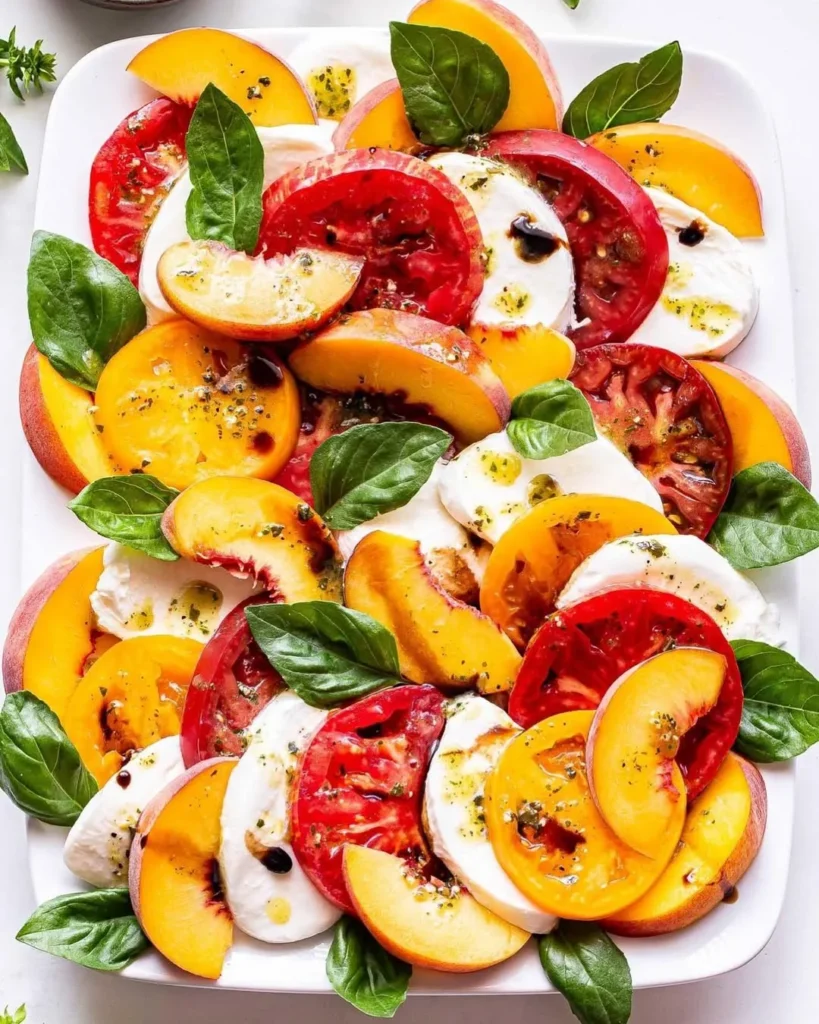
Tomato peach salad with basil is a stunning summer salad of ripe, juicy tomatoes and sweet, fresh peaches tossed together with torn basil leaves, a drizzle of good olive oil, a splash of aged balsamic, and a scatter of flaky sea salt that draws out the natural juices of both fruits into a dressing that forms all on its own at the bottom of the bowl. The tomatoes are acidic and savory. The peaches are sweet and floral. The basil ties everything together with its warm, herby fragrance. Every spoonful has all three.
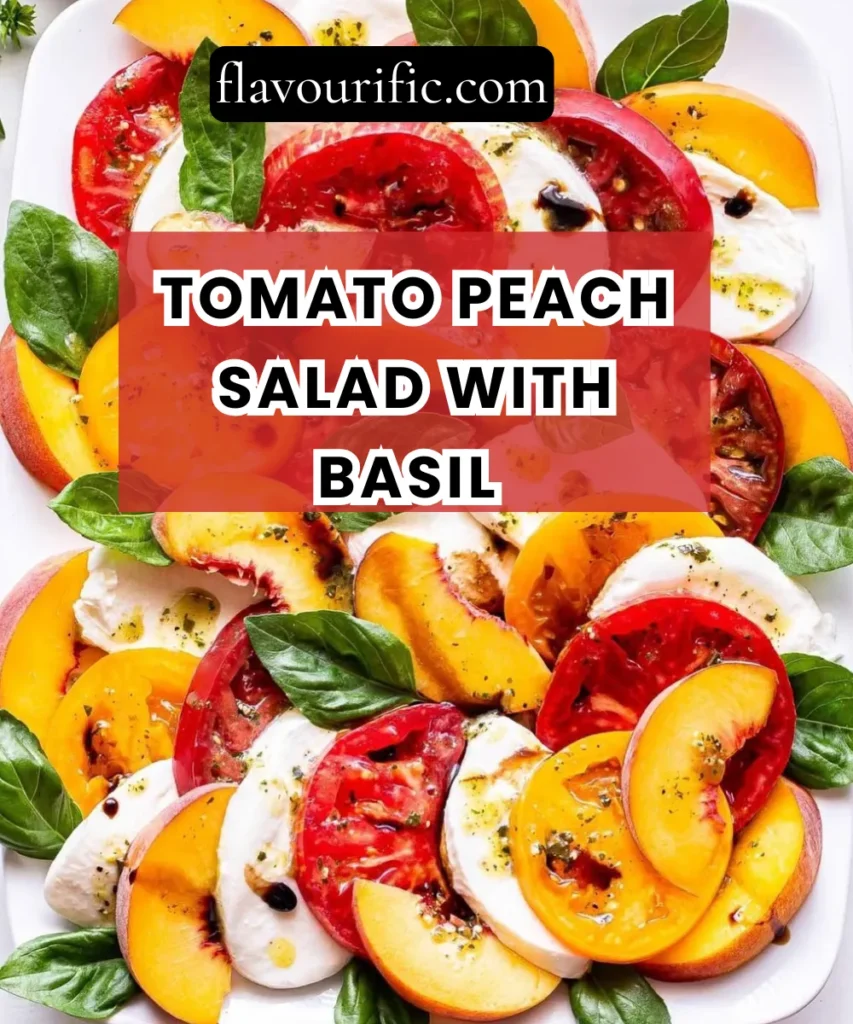
This is the salad that only exists for a few weeks a year when tomatoes and peaches are both at their absolute peak at the same time. It requires almost nothing. The ingredients do everything. A knife, a bowl, good olive oil, and the best produce the season has to offer.
Fifteen minutes to prep. Ten minutes to rest. A salad that looks like summer, arranged deliberately on a plate, and tastes even better than it looks.
Why You Will Love This Recipe
Tomato peach salad earns its place as the definitive summer side. Here is what makes this recipe worth making.
It requires almost no technique. Slice. Arrange. Dress. Rest. The most important skill in this recipe is choosing ripe fruit — and after that, getting out of the way.
The dressing forms by itself. Salt draws moisture from the tomatoes and peaches as they rest. That moisture mixes with the olive oil and balsamic and becomes the most naturally flavored dressing imaginable. Nothing from a bottle comes close.
It is ready in fifteen minutes and better after ten more. The brief resting time after dressing is what separates a good version from an extraordinary one. The salt does its work. The juices release. The flavors come together.
It looks like it took effort. Alternating slices of tomato and peach on a platter with torn basil scattered over the top looks composed and intentional. It is simply good produce arranged thoughtfully.
It pairs with everything summer produces. Grilled bread. Grilled fish. Grilled chicken. Cold pasta salad. A wedge of fresh mozzarella. The salad adapts to every context without changing.
Ingredients
For the salad:
- 4 medium ripe tomatoes — a mix of heirloom varieties if available, different colors and sizes
- 3 medium ripe peaches or nectarines, just ripe but still slightly firm
- ½ small red onion, very thinly sliced
- Large handful of fresh basil leaves, torn rather than chopped
- 75g (about ⅓ cup) fresh mozzarella or burrata, torn into pieces (optional but excellent)
For the dressing:
- 3 tablespoons good-quality extra virgin olive oil
- 1½ tablespoons aged balsamic vinegar or white balsamic for a lighter result
- 1 teaspoon honey (optional — balances the acidity)
- ½ teaspoon Dijon mustard (optional — emulsifies the dressing)
- Flaky sea salt and cracked black pepper to taste
For finishing:
- Extra basil leaves
- Extra drizzle of olive oil
- Extra flaky sea salt
- Pinch of chili flakes (optional)
- Toasted pine nuts or chopped pistachios (optional, for crunch)
Equipment Needed
- Large flat platter or wide shallow bowl
- Sharp knife and cutting board
- Small bowl and whisk for the dressing
- Measuring spoons
Instructions
Step 1: Choose the ripest tomatoes and peaches available. This salad has nowhere to hide mediocre produce. A slightly underripe peach or a mealy, pale tomato cannot be rescued by olive oil or balsamic. Smell the peaches at the stem end — ripe peaches are intensely fragrant there. Press tomatoes gently — they should give slightly without collapsing.
Step 2: Slice the tomatoes. Remove the core with a small knife. Slice into rounds approximately 1 cm thick or into irregular wedges for a more rustic presentation. If using a mix of heirloom varieties and cherry tomatoes, halve the cherry tomatoes and slice the larger ones. Season the tomato slices lightly with a pinch of flaky sea salt and set aside for 5 minutes. Salted tomatoes begin releasing their juice immediately, and the resulting liquid is the best part of the finished salad.
Step 3: Halve the peaches. Run a sharp knife around the natural crease of each peach from top to bottom, cutting all the way to the pit. Twist the two halves apart. Remove the pit with a spoon or the tip of the knife. Slice each half into 4–5 wedges approximately the same thickness as the tomato slices. Do not peel — the skin adds color and holds the wedges together.
Step 4: Slice the red onion paper-thin. The thinner the better — thick slices of raw onion overwhelm everything else in the salad. Soak the slices in cold water for 5 minutes and drain thoroughly. This removes the sharpest raw onion bite and leaves a milder, almost sweet onion flavor that complements rather than dominates.
Step 5: Make the dressing. Whisk together the olive oil, balsamic vinegar, honey if using, and Dijon mustard if using in a small bowl until emulsified. Season with salt and pepper. The dressing should taste predominantly of the olive oil and balsamic, balanced between rich and sharp. Taste and adjust.
Step 6: Arrange the salad on a large flat platter. Alternate tomato slices and peach wedges across the platter in a loose, overlapping pattern. Scatter the drained red onion over the top.
Step 7: Tear the mozzarella or burrata into irregular pieces and tuck it between the tomato and peach slices if using. The cheese should be distributed throughout rather than piled in one spot.
Step 8: Drizzle the dressing evenly over the entire platter. Use all of it — this salad absorbs dressing readily and benefits from a generous hand.
Step 9: Scatter the torn basil leaves over the top. Tear rather than chop — chopped basil bruises and turns dark at the edges within minutes. Torn basil stays bright green and releases its aroma gradually as the salad rests.
Step 10: Season with an extra pinch of flaky sea salt and a generous grind of cracked black pepper directly over the top.
Step 11: Rest the salad for 10 minutes before serving. Do not skip this. During this time, the salt draws juice from the tomatoes and peaches, the juices mix with the dressing, and everything settles into a cohesive, intensely flavored whole. The pool of liquid at the bottom of the platter after resting is the best part — spoon it back over the salad before serving, or use it to soak into grilled bread at the table.
Step 12: Finish with extra fresh basil, a final drizzle of your best olive oil, and toasted pine nuts or pistachios if using. Scatter a pinch of chili flakes if desired. Serve immediately at the table.
Substitutes & Swaps
Ripe peaches: Nectarines are interchangeable with peaches in this recipe and require no modification. White peaches give a floral, less acidic result. Ripe plums work for a more tart, jewel-colored variation. Ripe mango gives a tropical sweetness. In early summer, before peaches arrive, ripe strawberries work beautifully as the sweet element against the tomatoes.
Heirloom tomatoes: Any ripe, in-season tomato works. A mix of colors and sizes is more visually interesting than a single variety. Cherry tomatoes work well halved and scattered across the platter alongside sliced larger tomatoes for textural variation. The only tomato to avoid is an out-of-season supermarket tomato with no flavor — they cannot be rescued.
Aged balsamic vinegar: White balsamic gives a lighter, less sweet result and does not stain the peaches dark brown where it touches them. Sherry vinegar gives a more complex, slightly nutty acidity. A good red wine vinegar works for a sharper, more rustic dressing.
Fresh mozzarella: Burrata is richer and more indulgent — it splits open and the cream inside pools across the salad. Fresh ricotta dolloped over the salad gives a lighter, more delicate creaminess. Crumbled feta gives a salty, tangy contrast that is entirely different but equally good. Shaved Parmesan scattered over the top in the last moment works for a more savory result.
Fresh basil: Fresh mint gives a cooler, more refreshing quality that is excellent with peaches, specifically. A combination of basil and mint is extraordinary. Fresh tarragon gives a more anise-forward, sophisticated flavor. Fresh flat-leaf parsley works for a milder, more neutral herb presence.
Variations
Tomato Peach Caprese: Alternate tomato, peach, and thick slices of fresh mozzarella across a platter. Dress only with olive oil, flaky salt, and cracked pepper. Torn basil over the top. The simplest possible version of this salad is one of the most elegant.
Grilled Peach Tomato Salad: Halve the peaches and grill cut side down on a hot grill or grill pan for 2–3 minutes until caramelized marks appear and the flesh softens slightly. The grilled peaches against the raw tomatoes give a contrast of textures and a deeper, smokier sweetness from the caramelization. Outstanding alongside grilled fish or chicken.
Tomato Peach Salad with Prosciutto: Drape thin slices of prosciutto loosely over the arranged salad just before serving. The salt of the prosciutto against the sweet peach is one of the classic Italian summer flavor combinations. Omit the mozzarella or keep it — both versions are excellent.
Spicy Tomato Peach Salad: Add a finely sliced fresh red chili or a generous pinch of chili flakes to the dressing. The heat against the sweet peach and acidic tomato creates a completely different and deeply addictive flavor profile.
Tomato Peach Panzanella: Tear a day-old sourdough or ciabatta loaf into rough pieces and toast in a hot oven with olive oil until golden and crisp. Add to the platter with the tomatoes and peaches. The toasted bread soaks up the dressing and fruit juices and becomes the best part of the dish. A full summer lunch in one bowl.
Tips & Tricks
Season the tomatoes before assembling. Salt draws moisture from tomatoes through a process called osmosis. Lightly salting the sliced tomatoes five minutes before assembling the salad begins this process early and produces more of the intensely flavored natural juice that pools at the bottom of the platter during resting. This juice is the dressing at its best — do not tip it away.
Tear the basil, never chop it. Basil is delicate, and the cell walls along a cut edge bruise and oxidize almost immediately, turning the edges dark brown and releasing a slightly bitter, oxidized flavor. Torn basil has less exposed surface area, stays green longer, and releases its aroma more gradually as the salad is eaten. Always tear.
Choose peaches that are ripe but still slightly firm. Fully ripe, very soft peaches are delicious to eat, but collapse and become mushy when sliced and tossed with dressing. A peach that gives slightly when pressed but still has some firmness holds its shape through the resting time and plating, producing distinct, clean wedges in the finished salad.
Use your best olive oil. This salad is simple enough that every ingredient is tasted in every bite. A good extra virgin olive oil with genuine flavor — grassy, peppery, fruity — contributes to the final dish in a way that a bland, neutral oil cannot. This is the occasion for the bottle you are saving for something worth it.
Rest the salad before serving without exception. Ten minutes of resting after dressing is what transforms a combination of sliced fruit into an actual salad. The salt draws juice. The juice mingles with the oil and vinegar. The basil begins to soften and release its fragrance into the surrounding liquid. Everything comes together in those ten minutes in a way that no amount of tossing or stirring can replicate. Serve it immediately, and it tastes like dressed fruit. Rest it, and it tastes like a dish.
Serve at room temperature, never cold. Cold mutes the flavor of both tomatoes and peaches dramatically. Tomatoes stored in the fridge lose their aroma and much of their sweetness. Peaches from the fridge are firm and flavorless. This salad should be assembled from produce at room temperature and served within thirty minutes of making. It is not a salad that benefits from refrigeration at any stage.
Nutrition Information (Per Serving)
| Nutrient | Amount |
|---|---|
| Calories | 140 kcal |
| Total Fat | 10g |
| Saturated Fat | 1g |
| Carbohydrates | 12g |
| Fibre | 2g |
| Sugars | 9g |
| Protein | 2g |
| Sodium | 150mg |
Nutrition is based on one serving of tomatoes, peaches, red onion, basil, olive oil, and balsamic dressing without mozzarella or optional toppings.
Frequently Asked Questions (FAQs)
Can I make this salad ahead of time?
This salad is best assembled no more than 30 minutes before serving. The tomatoes and peaches release significant liquid over time, and the basil wilts and darkens. If preparing elements ahead, slice the fruit and make the dressing separately, and refrigerate them separately. Bring everything to room temperature before assembling and dressing at the last moment.
Do I need to peel the peaches?
No. The skin of a ripe peach is thin and tender enough to eat comfortably, and adds color to the salad. It also holds the wedge together structurally — peeled wedges fall apart more easily. If the skin is particularly tough or the peach is not fully ripe, a brief blanch in boiling water for 30 seconds, followed by an ice bath, loosens the skin for easy peeling.
My tomatoes are not very flavorful. How do I improve them?
Salt them generously and leave them for longer — up to 15 minutes. Salt draws out moisture and concentrates the flavor of the remaining flesh. A pinch of sugar helps if the tomatoes are very acidic with no sweetness. A small drizzle of olive oil directly on the tomato slices before assembling adds richness that compensates for the missing flavor. The honest answer, however, is that out-of-season tomatoes cannot be fully rescued, and this salad is worth waiting for until tomatoes are genuinely ripe and in season.
Can I use canned or jarred peaches?
The result is significantly different. Canned peaches are sweet and soft and lack the floral fragrance and slight firmness of fresh ripe peaches. They release excessive syrup into the dressing and make the salad overly sweet. If fresh peaches are unavailable, ripe nectarines, ripe plums, or ripe strawberries are all better substitutes than canned peaches.
What is the best tomato variety for this salad?
Any genuinely ripe, in-season tomato works well. Heirloom varieties — Brandywine, Cherokee Purple, Yellow Pear, Green Zebra — offer the most complex flavor and the most interesting colors for a visually stunning platter. A mix of colors and sizes makes the salad look more considered without any additional effort. The single requirement is that the tomatoes are ripe. Variety matters far less than ripeness.
Can I add protein to make this a full meal?
Yes. Cold, torn rotisserie chicken laid across the platter makes it a complete summer lunch. Thin slices of prosciutto draped over the top add protein and the classic Italian sweet-savory combination. Grilled halloumi cubes tucked between the tomatoes and peaches add substance and a pleasant chewiness. A poached egg placed in the center of the platter turns it into a complete dinner.
Why does my balsamic vinegar make the peaches turn brown?
Aged balsamic is dark and stains anything pale it touches. White balsamic vinegar gives the same sweet-sharp flavor without the dark color and keeps the peaches looking bright and golden. If you only have dark balsamic, dress the salad just before serving rather than letting it rest with the dressing, which minimizes the color transfer.
The Salad That Only Exists for Three Weeks a Year
There is a specific window — a few weeks in late summer when tomatoes are at their most intensely flavored and peaches are fragrant and heavy and arriving at the market still warm from the morning sun. This is the recipe for that window.
It asks almost nothing. Ripe fruit. Good olive oil. Fresh basil. Flaky salt. Ten minutes of patience after dressing and a platter large enough to arrange it properly.
Make it the first time tomatoes and peaches are both genuinely good at the same time. Make it every week until one of them disappears from the market. Make it for a dinner table where conversation stops when the platter lands and everyone reaches for it before the bread has been passed.
It is the salad that makes the whole summer worth having a garden for.
Made this tomato peach salad? Tell me in the comments which tomato varieties you used, whether you added mozzarella or burrata, and what you served it alongside. I want to hear every detail.
Tomato Peach Salad with Basil
Ingredients
- Salad:
- 4 medium ripe tomatoes mixed varieties if available
- 3 medium ripe peaches or nectarines slightly firm
- ½ small red onion very thinly sliced
- Large handful of fresh basil leaves torn
- 75 g fresh mozzarella or burrata torn (optional)
- Dressing:
- 3 tablespoons good quality extra virgin olive oil
- 1½ tablespoons aged balsamic or white balsamic vinegar
- 1 teaspoon honey optional
- ½ teaspoon Dijon mustard optional
- Flaky sea salt and cracked black pepper
- Finishing:
- Extra basil leaves
- Extra drizzle of olive oil
- Extra flaky sea salt
- Pinch of chili flakes optional
- Toasted pine nuts or chopped pistachios optional
Instructions
- Slice tomatoes into 1 cm rounds or wedges. Season lightly with flaky salt. Set aside 5 minutes to begin releasing juice.
- Halve peaches, remove pits, and slice each half into 4–5 wedges. Do not peel.
- Slice red onion paper thin. Soak in cold water 5 minutes. Drain thoroughly.
- Whisk olive oil, balsamic, honey, and mustard together until emulsified. Season with salt and pepper.
- Arrange alternating tomato slices and peach wedges across a large flat platter in a loose, overlapping pattern.
- Scatter drained red onion over the top. Tuck torn mozzarella or burrata between the slices if using.
- Drizzle all the dressing evenly over the platter.
- Scatter torn basil leaves over the top. Season with extra flaky salt and cracked black pepper.
- Rest for 10 minutes before serving. Spoon the accumulated juices back over the salad.
- Finish with extra basil, a final drizzle of olive oil, and pine nuts or pistachios if using. Serve immediately at room temperature.
Notes
- Salt tomato slices before assembling — it begins drawing juice immediately and produces the natural dressing that forms during resting
- Tear basil rather than chopping — torn basil stays green longer and does not oxidize at the cut edges
- Choose peaches that are ripe but slightly firm — very soft peaches collapse when sliced and dressed
- Use your best extra virgin olive oil — this salad is simple enough that every ingredient is tasted in every bite
- Rest the salad for the full 10 minutes after dressing — this step is what transforms it from dressed fruit into a genuine dish
- Serve at room temperature only — refrigeration kills the flavor of both tomatoes and peaches
- Use white balsamic to avoid staining the peaches dark brown where the dressing touches them
- Assemble no more than 30 minutes before serving — basil wilts and the fruit releases too much liquid beyond this point
- A mix of tomato colors and sizes makes the platter more visually interesting with no extra effort