The Best Lemon Buttercream Frosting Recipe (Silky, Tangy & Incredibly Easy)
Prep Time: 10 minutes | Cook Time: 0 minutes | Total Time: 10 minutes | Servings: Enough to frost a 2-layer 9-inch cake or 24 cupcakes | Calories: 290 kcal per serving (about ¼ cup)
If you have ever been disappointed by store-bought frosting, this is the recipe that will change everything. This lemon buttercream is smooth, silky, and bursting with real lemon flavour — not that artificial stuff that tastes like chemicals.
It comes together in ten minutes with no cooking involved. Just a mixer, a few pantry staples, and a little patience. That is all it takes.
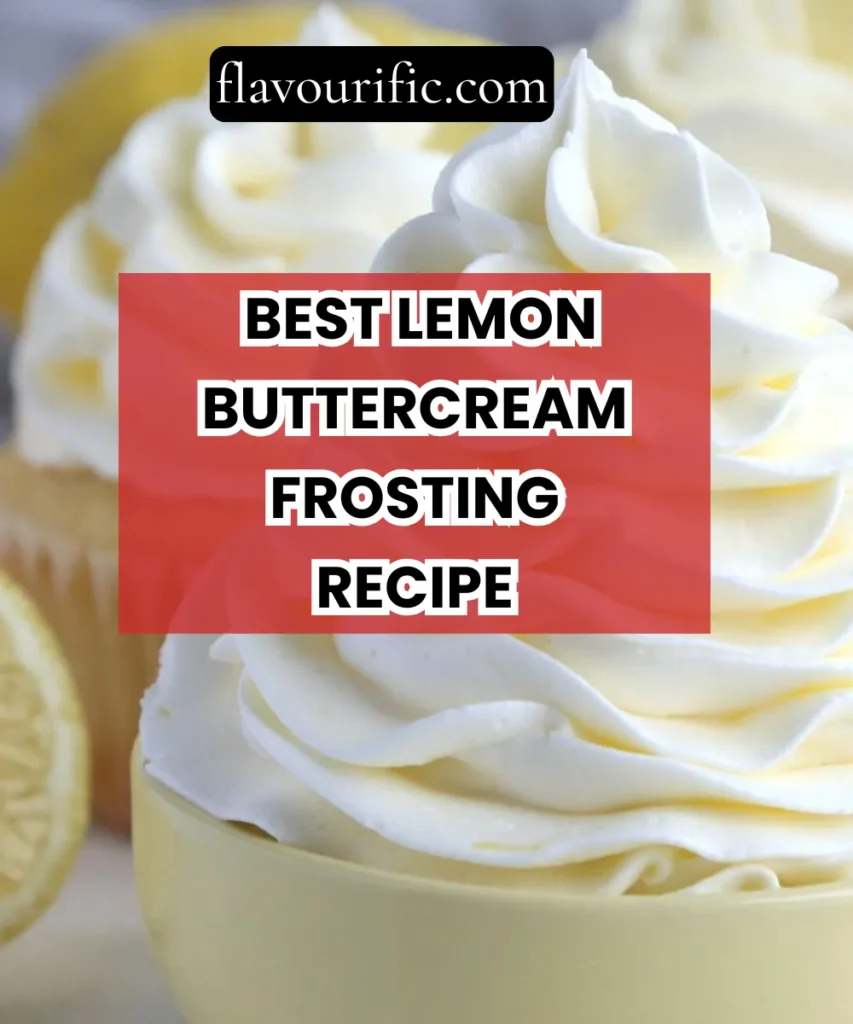
Once you make frosting from scratch, you will never go back to the tub again.
Why You Will Love This Recipe
This lemon buttercream is not your average frosting. Here is what sets it apart.
The lemon flavour is real and bright. There is no extract or artificial flavouring here. Fresh lemon juice and zest do all the work, and you can taste the difference immediately.
The texture is impossibly smooth. It is not greasy, not gritty, and not too heavy. It spreads like a dream and holds its shape beautifully.
It takes ten minutes to make. No cooking, no double boiler, no fuss. Mix it up and it is ready to use.
It is versatile enough for anything. Cakes, cupcakes, cookies, macarons — this frosting works on all of them and makes every single one taste better.
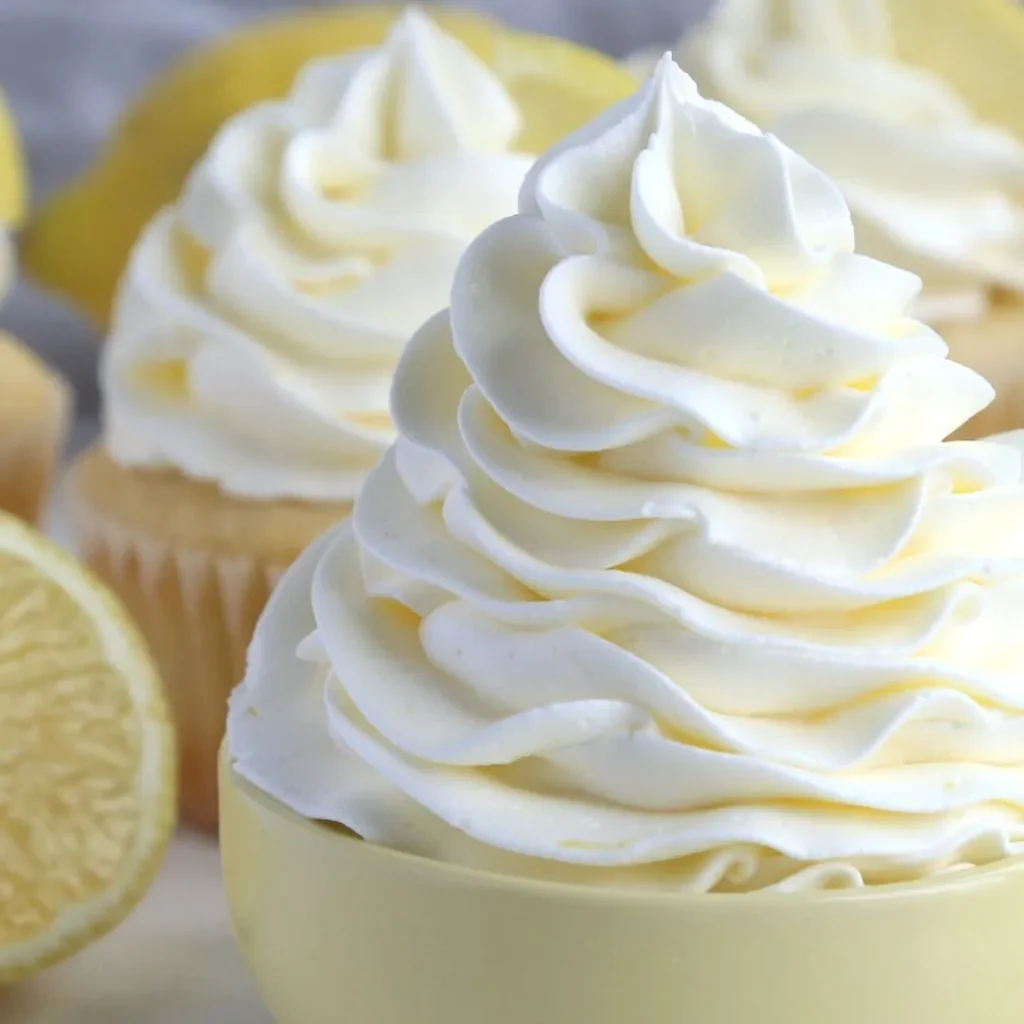
It looks stunning when piped. Whether you go for simple swirls or elaborate rosettes, this buttercream holds its shape and photographs beautifully.
Ingredients
- 1 cup (225g / 2 sticks) unsalted butter, at room temperature
- 3½ cups (420g) powdered sugar, sifted
- 2 tablespoons fresh lemon juice (about 1 large lemon)
- 1 tablespoon lemon zest (about 1 large lemon)
- 1 teaspoon vanilla extract
- 2–3 tablespoons heavy cream or milk
- Pinch of salt
Equipment Needed
- Stand mixer with a paddle attachment (or hand mixer with beaters)
- Large mixing bowl
- Measuring cups and spoons
- Fine grater or zester (for lemon zest)
- Citrus juicer or fork (for juicing the lemon)
- Spatula (for scraping down the sides of the bowl)
- Piping bags and tips (optional, for decorating)
Instructions
Step 1: Make sure your butter is properly at room temperature. It should be soft enough to dent with your finger but not melted or shiny. This is the most important step for smooth frosting.
Step 2: Add the softened butter to your mixing bowl. Beat it on medium speed for 2–3 minutes until it is light, fluffy, and pale in colour. Scrape down the sides as needed.
Step 3: Add the sifted powdered sugar one cup at a time, beating on low speed after each addition. This stops the sugar cloud from flying everywhere.
Step 4: Once all the sugar is in, add the lemon juice, lemon zest, vanilla extract, and a pinch of salt.
Step 5: Beat on medium-high speed for 2–3 minutes until everything is fully combined and smooth.
Step 6: Check the consistency. If it is too thick, add heavy cream or milk one tablespoon at a time, beating between each addition. If it is too thin, add a little more powdered sugar.
Step 7: Taste it. Adjust the sweetness or lemon flavour to your preference. Add a little more lemon juice if you want it sharper, or a touch more sugar if you want it sweeter.
Step 8: Use immediately or cover and refrigerate until ready. Bring it back to room temperature and give it a quick re-whip before using if it has been chilled.
Substitutes & Swaps
Butter: Use salted butter if that is all you have — just leave out the pinch of salt. Do not use margarine or shortening. They will give you a greasy, artificial-tasting frosting.
Powdered sugar: There is no real substitute for powdered sugar in buttercream. If you are out, you can blitz granulated sugar in a blender until it is a fine powder, but it will not be as smooth as store-bought icing sugar.
Fresh lemon juice: Do not use bottled lemon juice here. It is flat and lacks the brightness of fresh. If you do not have lemons, fresh lime juice and lime zest make a brilliant swap.
Heavy cream: Use milk if you do not have heavy cream on hand. The frosting will be very slightly thinner but still tastes great. Coconut cream works too if you want a dairy-free option paired with vegan butter.
Vanilla extract: Leave it out if you prefer a purely lemon-forward flavour. It adds warmth and depth, but the frosting will still be delicious without it.
Variations
Lemon Cream Cheese Buttercream: Beat 4 oz of softened cream cheese into the butter before adding the sugar. Tangier, richer, and incredible on carrot cake or red velvet.
Lemon Honey Buttercream: Replace half the powdered sugar with 2 tablespoons of good quality honey. More complex sweetness and a gorgeous glossy finish.
Lemon Lavender Buttercream: Add 1 teaspoon of dried culinary lavender to the sugar before sifting it in. Beautifully floral and perfect for spring celebrations.
Lemon Berry Buttercream: Fold in 2 tablespoons of seedless raspberry or strawberry jam after the buttercream is fully made. Swirl it through — do not fully mix it. Stunning colour and flavour.
Lemon Coconut Buttercream: Stir in ¼ cup of unsweetened shredded coconut at the end. Gorgeous texture and a tropical twist that pairs perfectly with lemon cake.
Tips & Tricks
Get your butter temperature right. This is the number one thing that makes or breaks buttercream. Too cold and it will be lumpy. Too warm and it will be greasy and loose. It should be soft and cool to the touch — leave it out for about an hour before you start.
Sift the powdered sugar. Skipping this step is how you end up with gritty frosting. Always sift it. No exceptions.
Beat the butter first, alone. Spending a couple of minutes whipping the butter on its own before adding anything else makes the final frosting noticeably lighter and smoother.
Add the cream gradually. You can always add more liquid, but you cannot take it out. Go one tablespoon at a time until you hit the consistency you want.
Taste as you go. Every lemon is different. Some are more tart, some are sweeter. Adjust the lemon juice and sugar until the flavour is exactly right for you.
Do not over-mix. Once the frosting looks smooth and holds its shape, stop mixing. Over-beating can make it air-bubbly and affect the texture when piped.
Make it ahead. This buttercream keeps in the fridge for up to 5 days in an airtight container. Bring it back to room temperature and re-whip for a minute before using. It also freezes well for up to 1 month.
Nutrition Information (Per Serving)
| Nutrient | Amount |
|---|---|
| Calories | 290 kcal |
| Total Fat | 16g |
| Saturated Fat | 10g |
| Carbohydrates | 36g |
| Fibre | 0g |
| Sugars | 35g |
| Protein | 0.5g |
| Sodium | 20mg |
Nutrition is approximate and based on 1 serving (roughly ¼ cup of frosting). Made with unsalted butter, powdered sugar, fresh lemon juice, and heavy cream. A standard 2-layer cake uses about 8 servings of frosting.
Frequently Asked Questions (FAQs)
Why is my buttercream grainy or gritty? The powdered sugar was not sifted properly, or your butter was too cold. Always sift the sugar and make sure the butter is genuinely soft before you start beating. Mixing for longer can also help smooth it out.
Why does my buttercream taste too sweet? Add a little more lemon juice or a tiny pinch of salt. Both cut through excess sweetness without changing the flavour profile. A splash of vanilla extract can also round it out.
Can I colour this buttercream? Yes. Use gel food colouring, not liquid. Liquid colouring thins out the frosting and washes out the colour. Add a drop at a time and mix until you hit the shade you want.
How much frosting does this recipe make? Enough to frost a 2-layer 9-inch round cake, 24 standard cupcakes, or about 12 generously frosted cupcakes. Double the recipe if you are decorating a larger cake or want plenty of extra.
Can I pipe this buttercream? Absolutely. This recipe holds its shape well when piped. If it feels too soft to pipe, refrigerate it for 10–15 minutes until it firms up slightly, then pipe as normal.
Does this frosting need to be refrigerated? If your kitchen is warm or if the cake is not being served the same day, yes. Buttercream with dairy should be kept cold if it is sitting out for more than 2 hours. A frosted cake can stay at room temperature for a few hours for serving.
Can I make this without a mixer? You can, but it will take real arm strength. Beat the butter vigorously by hand with a wooden spoon or whisk for several minutes before adding the sugar. It will not be quite as fluffy, but it will still taste great.
This Frosting Will Steal the Show
Nobody is remembering the cake. They are remembering the frosting. And once you nail this lemon buttercream, you will be the person everyone asks to bring dessert.
Make it this weekend. Put it on anything. Watch it disappear before the main course is even cleared from the table.
Tried this recipe? Tell me how it turned out in the comments below. I would love to know what you put it on.
Lemon Buttercream Frosting
Ingredients
- 1 cup 225g unsalted butter, softened
- 3½ cups 420g powdered sugar, sifted
- 2 tablespoons fresh lemon juice
- 1 tablespoon lemon zest
- 1 teaspoon vanilla extract
- 2 –3 tablespoons heavy cream or milk
- Pinch of salt
Instructions
- Beat softened butter for 2–3 minutes until light and fluffy.
- Add sifted powdered sugar one cup at a time on low speed.
- Add lemon juice, zest, vanilla, and salt.
- Beat on medium-high for 2–3 minutes until smooth.
- Add cream one tablespoon at a time until desired consistency.
- Taste and adjust sweetness or lemon flavour.
- Use immediately or refrigerate and re-whip before using.